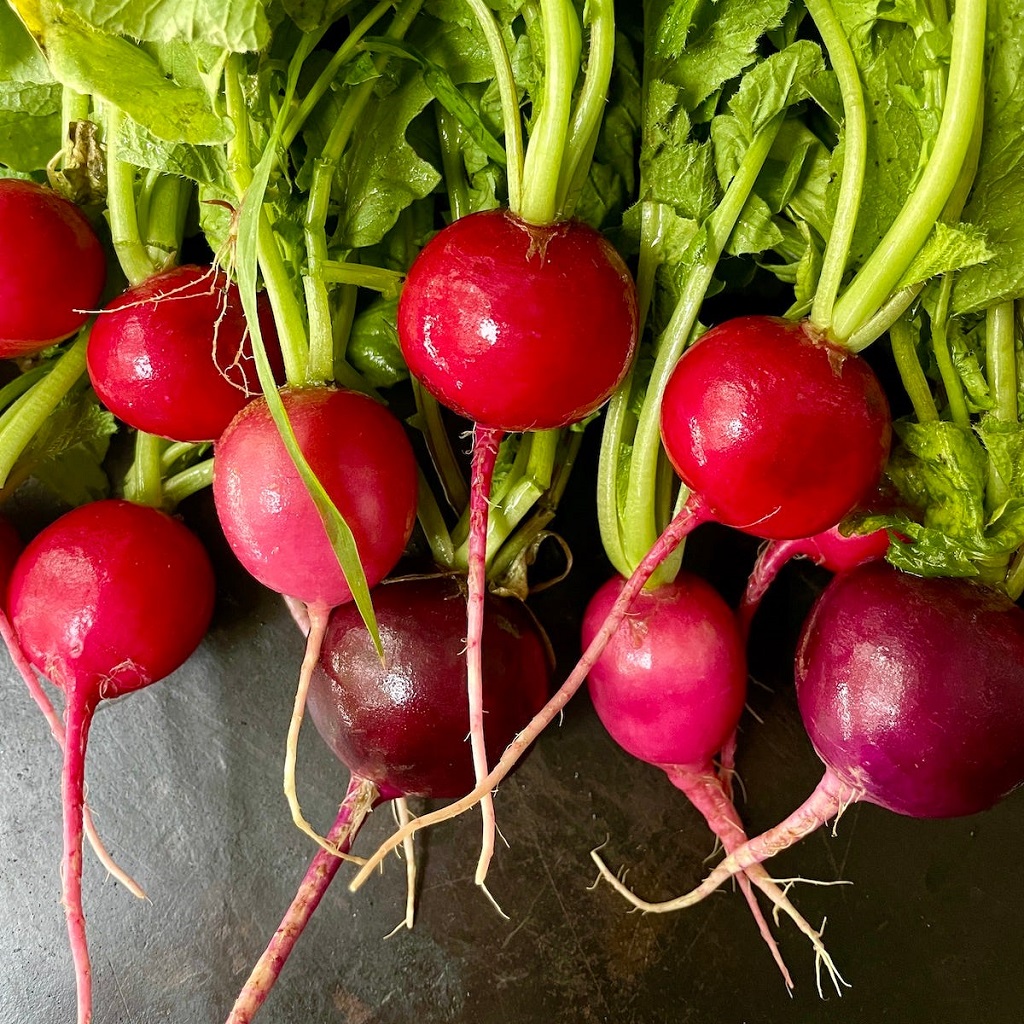
Radishes are easy to grow and are best planted in spring or fall in a sunny location with well-drained soil. Sow seeds directly into the ground, keeping the soil consistently moist and providing regular irrigation. Succession planting, where you sow seeds every few weeks, can ensure a continuous harvest.
Timing and Location
- Timing: Plant radishes in spring (2-3 weeks before the last frost) and again in early fall for fall production.
- Location: Choose a sunny spot (6+ hours of sunlight). Partial shade can be beneficial in hotter climates.
- Soil: Radishes prefer loose, fertile, well-drained soil with a pH of 5.5 to 6.8.
- Container Gardening: Radishes can also be grown in containers, but ensure the container has drainage and the soil is at least 6 inches deep.
Planting
- Sowing: Sow seeds directly into the ground about 1/2 inch deep.
- Spacing: Space seeds 1-3 inches apart in rows, with rows 12 inches apart.
- Thinning: Thin seedlings once they have 1-2 inches of space between them.
Care
- Watering: Keep the soil consistently moist, especially during dry periods.
- Fertilizing: Radishes don’t require much fertilizer, but you can add organic matter to improve soil fertility.
- Pest and Disease Control: Monitor for pests like flea beetles and slugs, and take appropriate action.
- Succession Planting: Plant radishes every 2-3 weeks to maintain a continuous harvest.
Harvesting
- Harvest: Harvest radishes when they are about 1 inch in diameter (red radishes) or 3/4 inch in diameter (white radishes).
- Signs of Readiness: The green tops of the radish plants should be 4-6 inches tall.
Companion Planting
- Good Companions: Plant radishes with lettuces, tomatoes, carrots, onions, peas, and spinach.
- Bad Companions: Avoid planting radishes near other brassicas (broccoli, cabbage, cauliflower, turnip, mustard) as they can share pests and diseases.
Leave a Reply