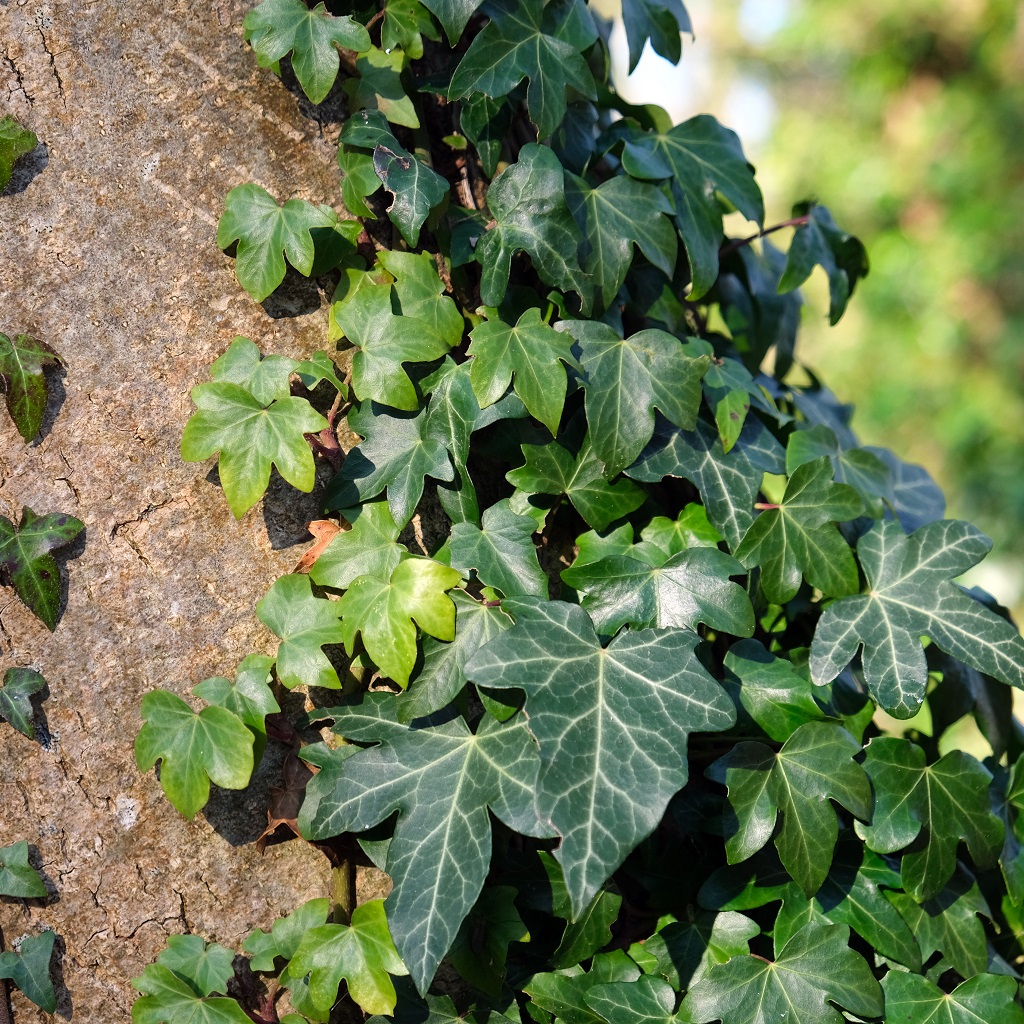
English Ivy (Hedera helix) is an invasive plant species, especially dangerous to trees due to its ability to smother and weaken them by shading their leaves and adding excess weight to branches. It also forms dense groundcover, disrupting native plant communities and harming wildlife.
Impact on Trees and Ecosystems:
- Shading and Suffocation: English Ivy climbs trees, envelops branches, and shades the canopy, blocking sunlight and hindering photosynthesis.
- Weight and Damage: The vines’ weight can cause branches to break, weakening the tree and making it susceptible to disease and wind damage.
- Groundcover: It forms dense mats on the ground, displacing native plants and creating monocultures that reduce biodiversity.
- Bacterial Leaf Scorch Reservoir: English Ivy can be a host for Bacterial Leaf Scorch (Xylella fastidiosa), a pathogen that affects various trees.
- Nutrient Changes: Its leaf litter can alter soil nutrient content, negatively impacting native plant growth.
- Displacement of Native Plants: English Ivy competes with native plants for resources, including sunlight, water, and nutrients, leading to the decline of native species.
Threat to Wildlife:
Altered ecosystems and the loss of native plant cover can negatively impact wildlife, reducing habitat and food sources.
Control and Prevention:
- Removal: Pulling rooted portions, cutting to the ground repeatedly, or using herbicides are methods for removal.
- Mulching: Mulching can smother English Ivy, especially in smaller infestations.
- Herbicide Treatment: Application of appropriate herbicides can be effective, but repeated treatments may be necessary.
- Prevention: Avoid planting English Ivy and choose native alternatives.
Invasive Species in California:
- English Ivy is listed as an invasive species in California and is particularly problematic in coastal regions.
- The California Department of Fish and Wildlife (CDFW) provides information and resources on English Ivy and other invasive plants.
- The CDFW website includes a list of plants to avoid and promotes the use of native alternatives.
Invasive Species in the Mid-Atlantic Region:
- The Mid-Atlantic region has seen an increase in English Ivy infestations in recent years, according to the Invasive.Org website.
- Invasive.Org provides information on English Ivy and its impact on various ecosystems.
Invasive Species in Texas:
- The Texas Invasive Species Institute provides information on English Ivy and its threat to Texas ecosystems.
- They highlight the plant’s ability to cover trees and plants, potentially stopping their normal succession.
Invasive Species in New Jersey:
- New Jersey is working on a bill to designate invasive plants, including English Ivy, according to the New Jersey Conservation Foundation.
- The bill is intended to address the issue of invasive species and their impact on local ecosystems.
Leave a Reply